lunedì 24 gennaio 2011

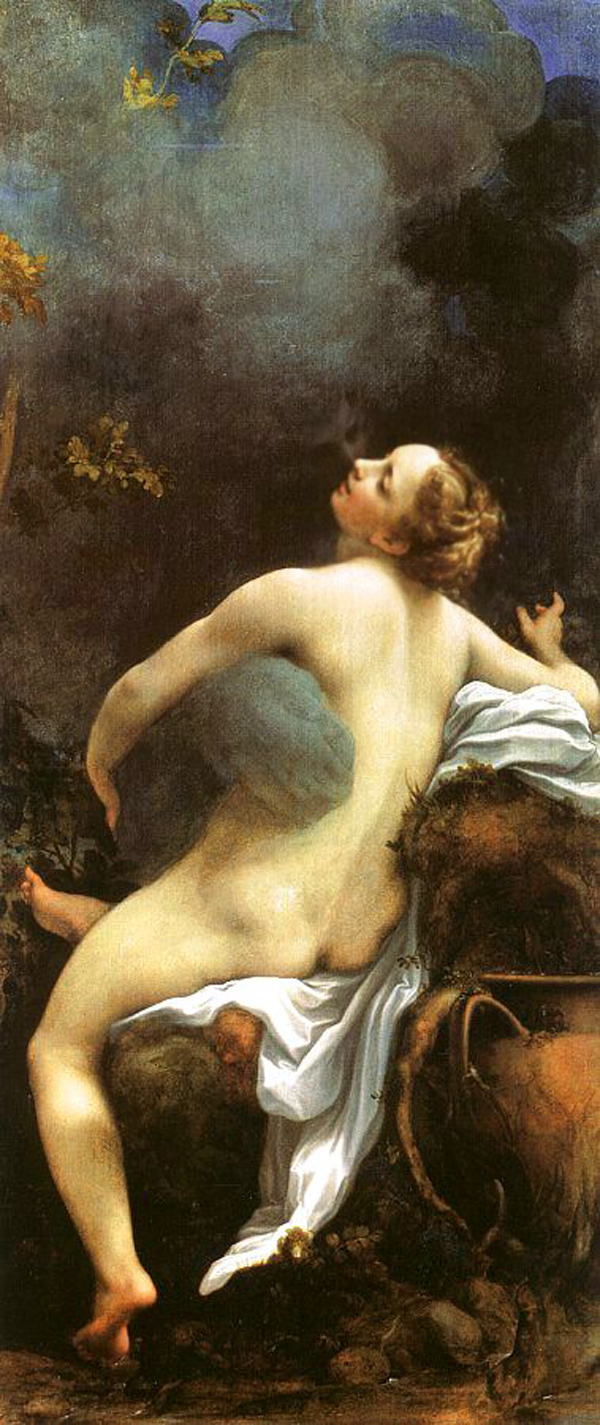
Correggio in un'opera: "Giove ed Io"


Chiunque conosca un poco la mitologia greca conosce senz'altro il Dio conquistatore per eccellenza, Zeus (in latino Giove) e le sue perpetue "love stories".
Zeus, da buon don giovanni, si innamorava continuamente di belle fanciulle (e anche fanciulli: Ganimede) e per riuscire a conquistarle prendeva le sembianze di animali, oggetti o addirittura nebbia come in questo caso.

L'episodio è tratto dalle Metamorfosi di Ovidio, in cui il grande autore latino ci racconta dell'amore di Giove per Io, sacerdotessa di Era e del tentativo di seduzione "originale", pensato per non farsi scoprire dalla gelosa moglie .

Detto ciò, ho voluto postare quest'opera perchè trovo che sia la più grande del Correggio, grande figura del periodo tardo-rinascimentale italiano. Vorrei soffermarmi soprattutto sulla dolcezza delle carni della sacerdotessa e sull'imponenza di Giove, che nonostante non abbia consistenza fisica ci comunica un senso di virilità, di forza. Queste due componenti portano l'opera a diventare la tela più sensuale della prima metà del '500 secondo il mio parere. Nessun altro artista è riuscito a conferire ad un dipinto una tale forza erotica, dolce e aggraziata allo stesso tempo.

E bravo il nostro Correggio!

lunedì 17 gennaio 2011

Venere e Cupido di Lorenzo Lotto


Lorenzo Lotto, Venere e Cupido, 1540
Olio su tela, 92,4 x 111,4 cm
New York, Metropolitan Museum of Art


Veneziano di nascita, è doveroso ricordare l'indole di viaggiatore di Lorenzo Lotto, costantemente alla ricerca di "fortuna", di affermarsi. Sfortunatamente, non sempre il merito viene premiato e un grande talento come questo è tutt'oggi considerato "di serie B".

Lorenzo Lotto (Venezia, 1480 - Ancona, 1557)

domenica 16 gennaio 2011

Il Poeta in Me: "La Metamorfosi"

Le impavide pupille
della ragazza dal lungo manto,
di copertura,
sono un libro aperto
per chi di conoscerla, ha la fortuna.

La forte interiorità,
la debole interiorità,
scalfitta da mille tempeste
ma mai abbattuta,
come una gloriosa fenice rinasce.

Lo sguardo ora è fiero,
maestoso e superbo,
di grande dignità segno,
tra mari tempestosi ed innumerevoli onde
strada si fa.

Un impercettibile cenno rivela
quella nascosta dolcezza,
quella nascosta ragione,
che ad un nuovo futuro si apre.


Ho scritto questa poesia per una mia amica un mesetto fa circa. E' una delle tante che ho scritto e ho deciso di pubblicarla qui sul blog. Cosa ne pensate?

Tiziano, Maestro della Scuola Veneta.


Concerto Campestre,
Museo del Louvre, Parigi


Danae
Museo Nazionale di Capodimonte, Napoli


Venere allo Specchio
National Gallery of Art, Washington


Ho inserito qui alcune delle mie opere preferite di Tiziano, che fu il più importante pittore non solo della scuola veneta (battendo in grandezza Giorgione, suo maestro) ma di tutto il periodo tardo-rinascimentale italiano.
Tiziano rivoluzionò la pittura dell'epoca grazie al suo metodo pittorico unico, che si concentrava su tre punti fondamentali:

-Luce
-Colore
-Movimento

Le opere che ho postato sono state realizzate nel pieno della carriera di Tiziano, lo si capisce dalla vivacità dei colori. In futuro posterò anche opere realizzate verso la fine dei suoi anni. Per il momento spero che queste siano di vostro gradimento!

lunedì 27 dicembre 2010

'Darkness' by Lord Byron


I had a dream, which was not all a dream.
The bright sun was extinguished, and the stars
Did wander darkling in the eternal space,
Rayless, and pathless, and the icy earth
Swung blind and blackening in the moonless air;
Morn came and went -and came, and brought no day,
And men forgot their passions in the dread
Of this their desolation; and all hearts
Were chilled into a selfish prayer for light;
And they did live by watchfires -and the thrones,
The palaces of crowned kings -the huts,
The habitations of all things which dwell,
Were burnt for beacons; cities were consumed,
And men were gathered round their blazing homes
To look once more into each other's face;
Happy were those which dwelt within the eye
Of the volcanoes, and their mountain-torch;
A fearful hope was all the world contained;
Forests were set on fire -but hour by hour
They fell and faded -and the crackling trunks
Extinguished with a crash -and all was black.
The brows of men by the despairing light
Wore an unearthly aspect, as by fits
The flashes fell upon them: some lay down
And hid their eyes and wept; and some did rest
Their chins upon their clenched hands, and smiled;
And others hurried to and fro, and fed
Their funeral piles with fuel, and looked up
With mad disquietude on the dull sky,
The pall of a past world; and then again
With curses cast them down upon the dust,
And gnashed their teeth and howled; the wild birds shrieked,
And, terrified, did flutter on the ground,
And flap their useless wings; the wildest brutes
Came tame and tremulous; and vipers crawled
And twined themselves among the multitude,
Hissing, but stingless -they were slain for food;
And War, which for a moment was no more,
Did glut himself again; -a meal was bought
With blood, and each sate sullenly apart
Gorging himself in gloom: no love was left;
All earth was but one thought -and that was death,
Immediate and inglorious; and the pang
Of famine fed upon all entrails -men
Died, and their bones were tombless as their flesh;
The meagre by the meagre were devoured,
Even dogs assailed their masters, all save one,
And he was faithful to a corse, and kept
The birds and beasts and famished men at bay,
Till hunger clung them, or the drooping dead
Lured their lank jaws; himself sought out no food,
But with a piteous and perpetual moan,
And a quick desolate cry, licking the hand
Which answered not with a caress -he died.
The crowd was famished by degrees; but two
Of an enormous city did survive,
And they were enemies: they met beside
The dying embers of an altar-place
Where had been heaped a mass of holy things
For an unholy usage: they raked up,
And shivering scraped with their cold skeleton hands
The feeble ashes, and their feeble breath
Blew for a little life, and made a flame
Which was a mockery; then they lifted up
Their eyes as it grew lighter, and beheld
Each other's aspects -saw, and shrieked, and died -
Even of their mutual hideousness they died,
Unknowing who he was upon whose brow
Famine had written Fiend. The world was void,
The populous and the powerful was a lump,
Seasonless, herbless, treeless, manless, lifeless -
A lump of death -a chaos of hard clay.
The rivers, lakes, and ocean all stood still,
And nothing stirred within their silent depths;
Ships sailorless lay rotting on the sea,
And their masts fell down piecemeal; as they dropped
They slept on the abyss without a surge -
The waves were dead; the tides were in their grave,
The Moon, their mistress, had expired before;
The winds were withered in the stagnant air,
And the clouds perished! Darkness had no need
Of aid from them -She was the Universe!


He was so unique, so damn perfect!

domenica 26 dicembre 2010

"La Benedizione"

E' la poesia con cui si aprono "I Fiori del Male". Mentre gli autori erano soliti invocare le Muse in segno di buon auspicio per l'opera da comporre, Baudelaire, da poeta maledetto quale appunto era, decide di cominciare la raccolta con una poesia alquanto inquieta.

Vorrei soffermarmi soprattutto sulla seconda quartina:


"
Avessi partorito un groviglio di vipere
piuttosto che nutrire questa derisione!
Maledetta notte degli effimeri piaceri
quando il mio ventre concepì questa espiazione"


Sono versi poco famosi quanto forti. Benchè non inneggino all'amore o ad altri nobili sentimenti meritano di essere ricordati.


I fiori del Male, Charles Baudelaire


Insieme ai "Canti" di Leopardi è indubbiamente il mio libro di poesie preferito.

L'acuta intelligenza e la sublime arte del comporre dell'autore sono ciò che più mi fanno apprezzare la sua arte, la sua "malefica" arte.

Ho anche recensito ogni singola poesia del libro, con voto annesso. E' sicuramente da leggere.